
Narrowing Down an Allergy Trigger
Keep symptom buttons and suspect buttons apart, and you can work backwards from the time a symptom started to whatever came before it.
Narrowing Down an Allergy Trigger
Sometimes you know your body is reacting to something and have no idea what. It could be one of the things you ate yesterday, or it could be the new detergent. This is where a record becomes a way to cross candidates off one by one.
The reason it stays hidden is usually the delay
When a reaction comes immediately, anyone spots it. The trouble is the one that shows up hours later, sometimes the next day. By then you have eaten, touched and been to too many places to point at any of them.
A record carries the time, so you can work backwards from it. “This started at three, so let's look at the six hours before that” becomes possible.
Make symptom buttons and suspect buttons separately
Don't put it all in one button. Splitting them in two is the whole trick.
- The symptom side: hives, runny nose, itching, sneezing, whatever showed up on you
- The suspect side: milk, nuts, wheat, a house with a cat, a new cosmetic, whatever you were exposed to
Split this way, you can later filter the search screen down to the symptom buttons alone, then look at which exposure buttons sit in front of those times.
The gap is the clue
Each button shows how long it has been since its last record: just now, 30 min ago, 3 hours ago. If the gap between an exposure and a symptom is similar every time, that is a fairly strong signal. If the gap is all over the place, it is telling you to look elsewhere.
Each button carries the time since it was last tapped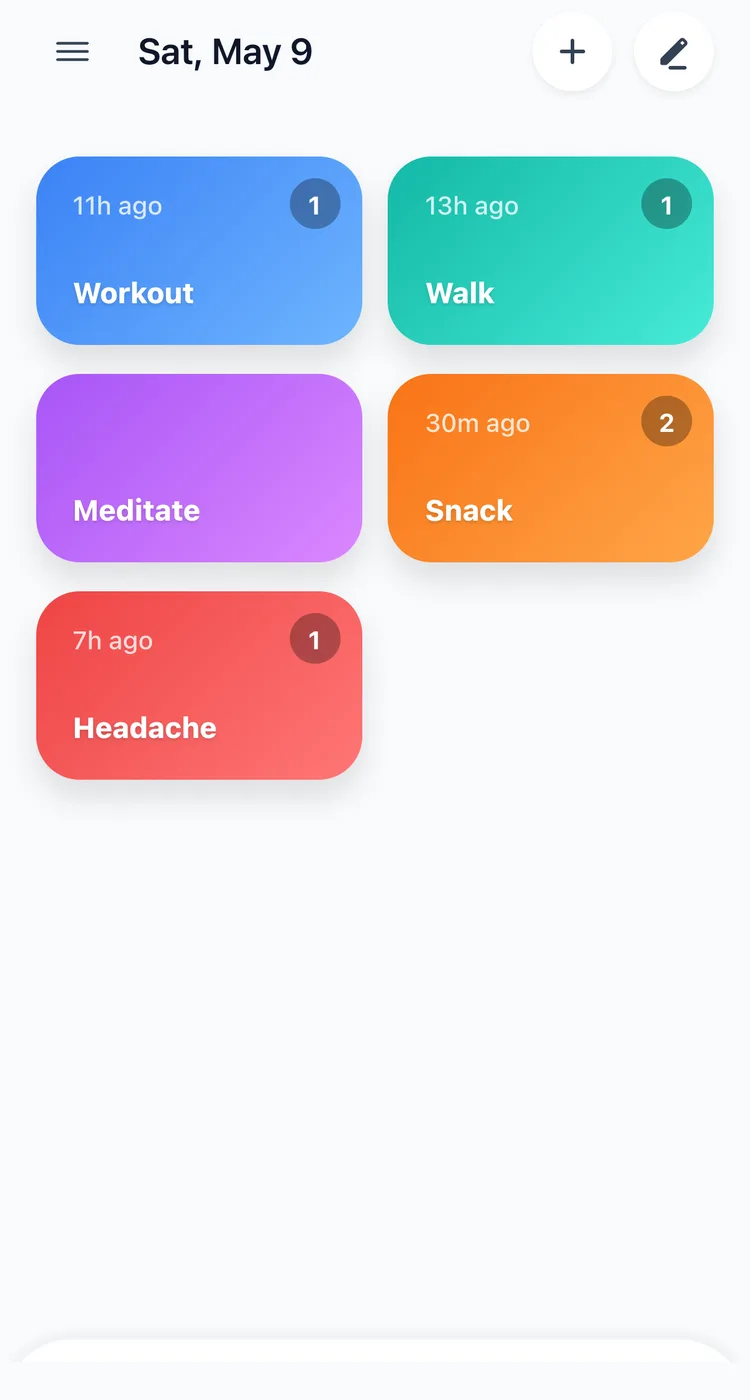
Remove one candidate at a time
Cut everything you suspect at once and the symptoms may improve without telling you which one deserves the credit. Drop one and keep recording. After about two weeks, check whether the symptom records went down, then move to the next candidate.
Restricting food can lead to nutritional problems, so work with a doctor or a dietitian, especially for a child or when several foods have to come out at once.
The season and the weather are already in there
You do not have to write them down. The dates are there, so you can check later whether the symptoms cluster in a particular stretch of the year: only in spring, or every time the seasons turn. The activity calendar in the monthly statistics shows which days they gathered on, in colour.
The darker the day, the more you recorded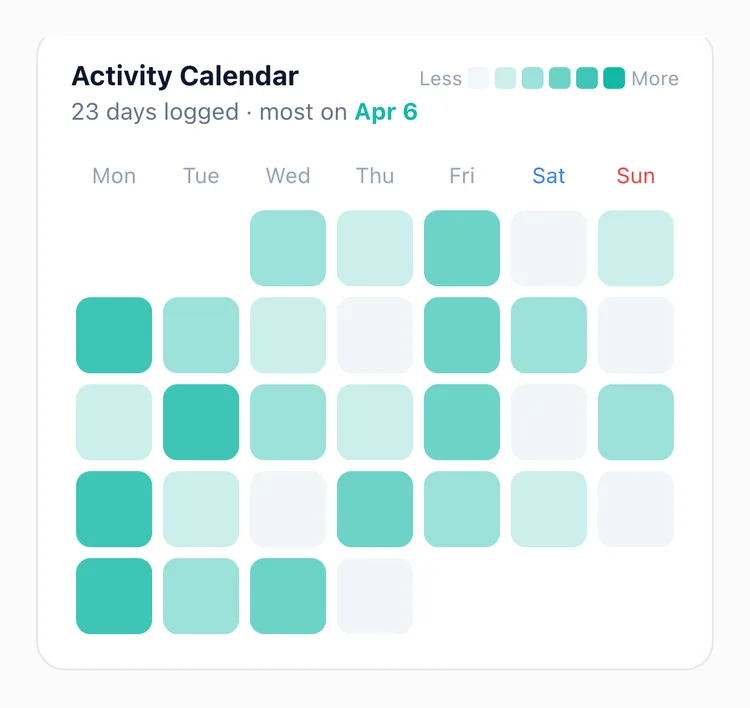
Testing and recording complete each other
An allergy test tells you what your body can react to. A record tells you what actually happened in your days. There are cases where a test comes back positive and nothing ever bothers you, and cases where nothing shows on a test but something repeats in a particular situation.
You need both side by side for the judgement to be accurate. Make that judgement with a doctor, and prepare the record as what you bring to that room.
A reaction that makes it hard to breathe or swells your face is not a situation for recording. Get emergency care.
Related posts
Start recording with a single tap
No signup, just your personal records.