
What Are Night Terrors? The Child Who Screams in the Night
An hour or two after falling asleep they scream, they do not respond to comforting, and in the morning they do not remember. What night terrors look like, how they differ from nightmares, and what to do in the moment.
What Are Night Terrors? The Child Who Screams in the Night
An hour or two after falling asleep, your child suddenly screams. The eyes are open but there is nothing behind them, they push you away when you hold them, and calling their name barely gets a response. A few minutes later they are asleep again as if nothing happened, and in the morning they do not remember. The first time it happens, it is a frightening night.
What it looks like
A night terror is deep sleep with only part of the body awake. It comes an hour or two after falling asleep, usually in the first half of the night.
- They suddenly scream or cry
- Their eyes are open but unfocused, and they barely respond when called
- They sweat, their heart races and their breathing is fast
- They push you away or thrash when you try to hold them
- It usually settles on its own within a few minutes and they fall back asleep
- In the morning they have no memory of it
It shows up mostly between toddler age and the early school years, and for most children it fades on its own as they grow.
They are not nightmares
When a child cries at night, it is hard to tell whether it was a nightmare or a night terror. A few things set them apart.
| Night terror | Nightmare | |
|---|---|---|
| When it happens | An hour or two after falling asleep, early in the night | Later in the night, closer to dawn |
| How the child responds | Barely responds to comforting | Wakes, clings to you and responds to comfort |
| Memory in the morning | No memory of it | Remembers the frightening dream |
| Afterwards | Falls back asleep soon | Too frightened to fall back asleep |
Why they happen
There is no single cause, but they often cluster on nights like these.
- When they have not slept enough or went to bed later than usual
- When they skipped a nap and are overtired
- When they have a fever or are unwell
- When they are travelling or sleeping somewhere unfamiliar
- When their daily rhythm has been disrupted
It is also common for someone else in the family to have had something similar as a child.
What to do in the moment
Trying to force your child awake tends to leave them more confused and can drag the episode out. For the most part, waiting for it to pass is all there is to do.
- Stay nearby, watching so they do not hurt themselves
- Check around the bed, the stairs and the doors, and make things safe
- Do not shake them or force them awake
- Do not press your child about it in the morning. Not remembering is normal
- Keep bedtime consistent and try not to let them get overtired
When to see a doctor
Most children grow out of it, but see a doctor if any of the following apply.
- When their body stiffens or the same pattern of shaking repeats
- When they seem to stop breathing in their sleep or snore heavily
- When it happens every night, or several times in one night
- When they are unusually sleepy during the day or it affects daily life
- When it continues without easing as they get older
- When there is a risk of them getting hurt during an episode
This article is a general explanation. If you are worried about your child, see a pediatrician or a sleep specialist.
A record makes it easier to explain
The questions in the exam room tend to be the same ones. How many nights in a month, what time it usually happens, how long after falling asleep. These are the things that are vivid on the night itself and blur within a few days.
TapDiary is an app where one tap on a button leaves the time. Make one “Night terror” button, tap it once when the episode starts, and that is the whole job on a night you need to stay beside your child. If it passed without you tapping, you can add it in the morning and correct the time.
Add a “Fell asleep” button and the two records sit side by side on the timeline, so you can see whether the gap after falling asleep is about the same each time.
Two buttons are enough to keep that nightHow long after falling asleep it was, right there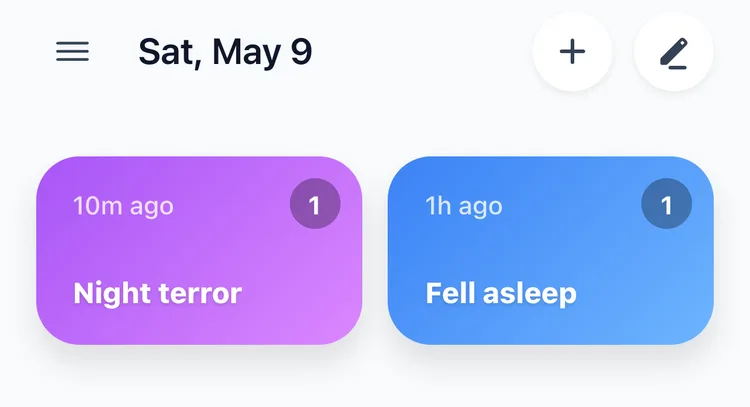
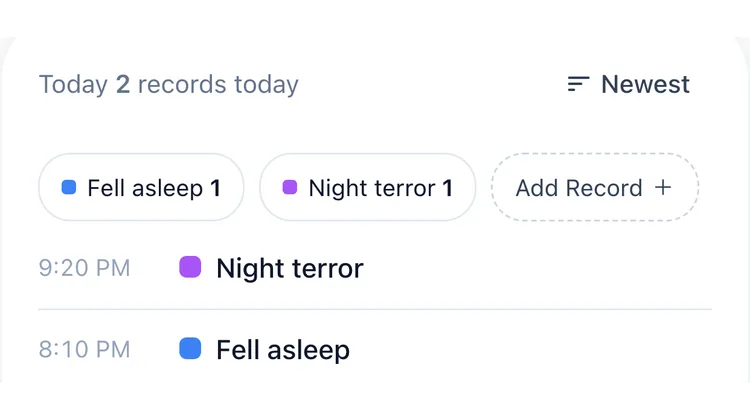
Night terrors come and go, so it takes a few weeks before a pattern shows. The statistics screen tells you how many nights there were this month and whether that is up or down from last month. It also shows whether they cluster on particular days of the week.
How many nights this month, and whether that is down from last monthIt also shows whether they cluster on certain days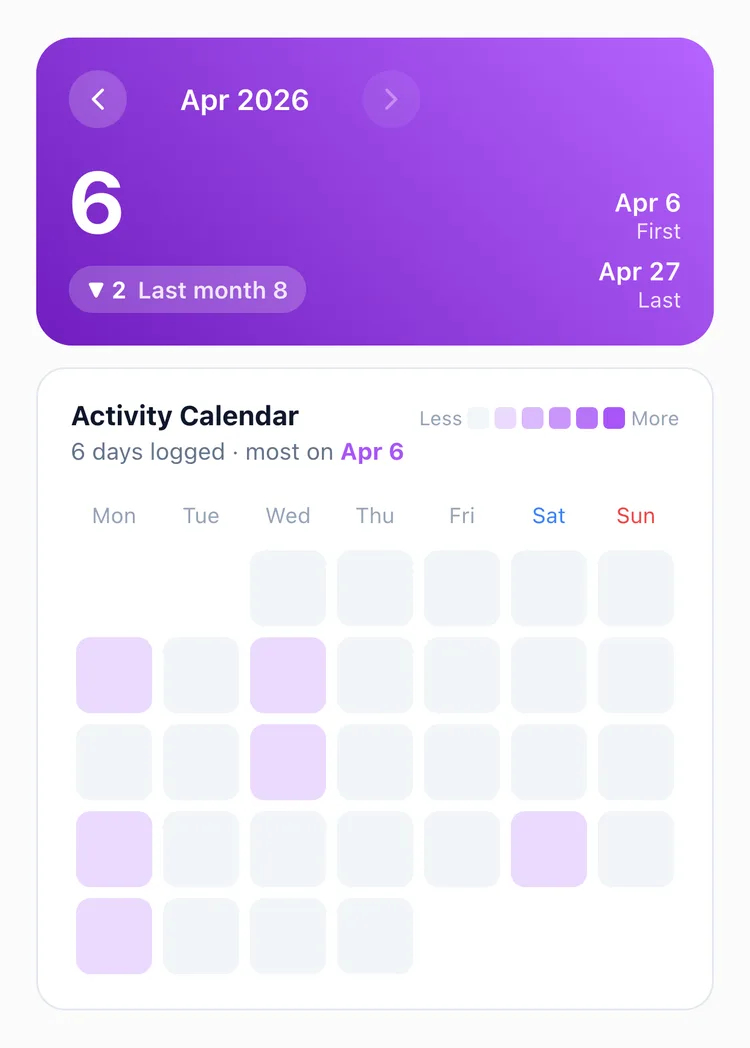

No sign-up is needed and the records stay on your device. In the exam room, just show the screen as it is.
Related posts
Start recording with a single tap
No signup, just your personal records.